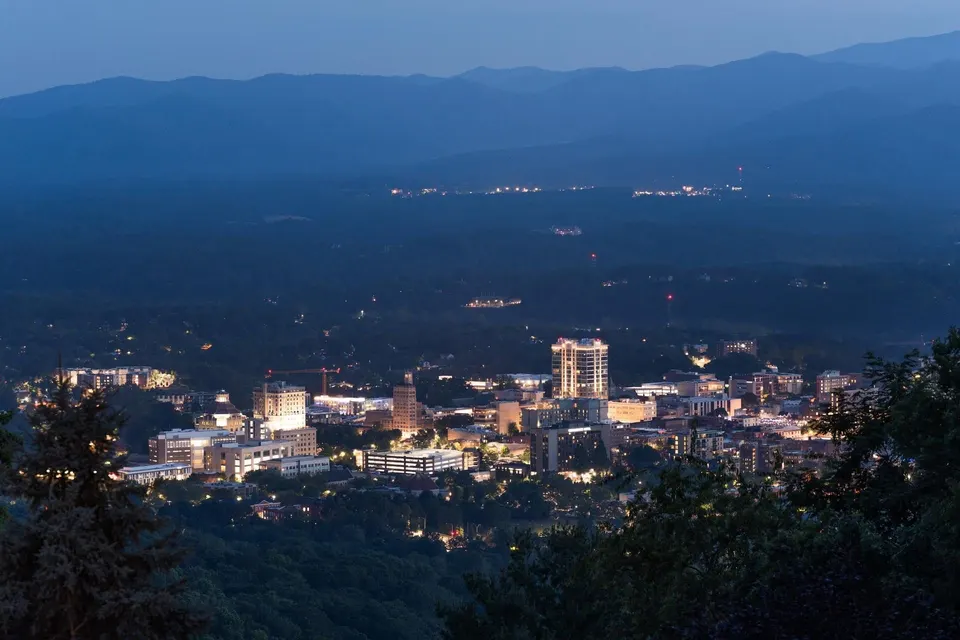
Greenville and Asheville sit about an hour apart on I-26, and they suit different buyers. Asheville is a mountain town first: higher and cooler, shaped by the arts, tourism, Biltmore Estate and the Blue Ridge Parkway. Greenville is a working city anchored by Michelin North America, BMW, Prisma Health and Bon Secours, with a walkable Main Street and GSP's 30 nonstop destinations. Taxes split the decision. North Carolina's flat 3.99% income tax in 2026 beats South Carolina's 5.21% top rate, but South Carolina assesses a primary residence at 4% of value while North Carolina assesses everything at full market value. Since Hurricane Helene, careful buyers on both sides of the line study where a property sits relative to rivers and slopes. The Cliffs bridges the two, with Walnut Cove near Asheville and Glassy, Cliffs Valley and Mountain Park near Greenville, all on one membership.
Who This Is For (and Who It's Not)
Ideal for
- Greenville: executives and families tied to Michelin, BMW, Prisma Health, Bon Secours or the suppliers around them.
- Greenville: frequent flyers who want more nonstop options close to home.
- Greenville: buyers whose main house will be their primary residence and who want the 4% assessment ratio.
- Asheville: buyers who want a mountain town with an arts identity, cooler summers and the Parkway nearby.
- Asheville: high earners for whom a lower state income tax outweighs property tax structure.
- Either, through The Cliffs: golfers who want both sides of the state line on one membership.
Not ideal for
- Asheville: anyone who wants a quiet downtown on weekends. Tourism is the economy, and the visitors arrive accordingly.
- Asheville: buyers who want to skip due diligence on slope, drainage, access roads and nearby rivers.
- Greenville: anyone expecting mountain air in July without buying elevation.
- Greenville: buyers who want the arts to set the city's tone. Greenville has the Peace Center, but it is a business town first.
Lifestyle Reality
Asheville feels like a destination because it is one. Downtown, Biltmore Village and the galleries run on visitors as much as residents, which gives the city restaurants and a creative scene well beyond its size. It also brings weekend crowds and a long local argument over short-term rentals. If you plan to live there, find out whether the house next door can become one.
Greenville feels like a place people commute to. Main Street fills with office workers at lunch, Falls Park gets used on weekday evenings, and the economy runs on Michelin, BMW, Prisma Health and Bon Secours rather than overnight stays. It is less romantic and more predictable, which for some buyers is the point.
Climate is the cleanest difference. Asheville sits higher and runs cooler. Greenville is warmer, and its summers are hot. Buyers who want Greenville's job base and airport with mountain air look at The Cliffs at Glassy, which offers elevation without leaving South Carolina.
Air travel favors Greenville on breadth. GSP had 30 nonstop destinations as of February 2026 and passed 3 million passengers in 2025. Asheville Regional served 2.2 million passengers in 2025, its second-busiest year. An hour apart, either city can use either airport.
Healthcare follows the same pattern. Asheville leans on Mission Hospital. Greenville has two full systems in Prisma Health and Bon Secours.
Real Estate Reality
Asheville's high end gathers in a few places. Biltmore Forest offers established estates near Biltmore Village. Montford and the Grove Park area carry historic houses close to downtown. Farther out, Black Mountain, Weaverville and the ridgelines trade on long views, often with steep, winding drives.
Greenville's market is flatter in both senses. Augusta Road, Alta Vista and Parkins Mill offer established in-town streets, Montebello adds Paris Mountain views, and the Cliffs mountain communities sit north of the city.
Hurricane Helene changed how buyers read land in Western North Carolina. The storm hit in late September 2024. The state budget office estimated $59.6 billion in damage and recovery needs, more than 73,000 homes were damaged, and more than 100 people died in North Carolina. The River Arts District was devastated, and Asheville's water system was out for weeks. The recovery since is measurable, from AVL's second-busiest year in 2025 to downtown visitation up 5.8% year over year in February 2026. Serious buyers now ask where a property sits relative to rivers and creeks, how the slope above and below it behaves, and how many roads lead out. Those questions apply on the South Carolina side too.
North Carolina assesses all real property at 100% of market value, taxed at county and municipal rates, with no split between a primary and a second home. South Carolina assesses an owner-occupied legal residence at 4% of fair market value and second homes at 6%, and you must apply for the 4%. Ratios are not bills. Compare actual tax bills on comparable homes.
Insider Perspective: What Most Buyers Miss
Moving to Greenville raises a high earner's income tax. North Carolina is a flat 3.99% in 2026, with 3.49% scheduled for 2027. South Carolina's top rate is 5.21%. Anyone pitching the Greenville move to an Asheville resident as a tax win is pitching the wrong thing. South Carolina's edge is the primary-residence ratio.
North Carolina is kinder to second homes. South Carolina is kinder to primaries. With no split in North Carolina, an Asheville second home is assessed the same as if you lived in it. In South Carolina, the same house used as a second home moves from 4% to 6%.
A North Carolina mountain house does not cost you the South Carolina 4%. A married couple gets one legal residence in South Carolina. If the mountain home is in North Carolina, at Walnut Cove or elsewhere near Asheville, the South Carolina primary keeps its 4%. A second home inside South Carolina would sit at 6%. Confirm with a CPA and the county assessor.
Ask when the county revalues. North Carolina counties must revalue at least every eight years, and many do it about every four. A house bought late in a cycle can look cheaper to carry than it will after the next revaluation.
One Cliffs membership crosses the state line. Full Golf, $100,000 initiation plus $1,710 a month in 2026, includes unlimited play on all seven Cliffs courses, from the Jack Nicklaus course at Walnut Cove to Glassy's Tom Jackson course. Living near Greenville and playing near Asheville, or the reverse, is built into the structure. Moving between Cliffs properties carries a $5,000 transfer fee.
Water and access deserve the same scrutiny as the view. After weeks without municipal water in Asheville, buyers learned to ask about wells, backup supply, and whether the only road out crosses a creek.
Three trade-offs worth sitting with
- Lower income tax or a lower primary-residence ratio. North Carolina wins on income, South Carolina on the house you live in. Which matters more depends on your income and your home's value.
- Character or convenience. Asheville has the stronger identity and the cooler air. Greenville has the job base, the broader airport and a downtown that does not depend on visitors.
- The view or the margin of safety. The most dramatic mountain lots often come with steep slopes, long drives and creek crossings. The safer lot may have the smaller view.
Related Insights
If Greenville is pulling ahead, our guide to living in Greenville SC covers the city day to day, and our answer to whether Greenville is genuinely upscale takes on the question Asheville buyers tend to ask next. For the bridge between the two, see how the seven Cliffs communities compare, look closely at The Cliffs at Glassy, and widen the lens with our view of the best Southeast cities for luxury relocation.
A Local, Advisory Perspective
Our work sits in Greenville and across The Cliffs, which reaches from Glassy to Walnut Cove outside Asheville. That lets us look at this decision without needing either city to win. Most buyers weighing Greenville against Asheville are really settling three things: which state's tax structure fits their income and holdings, how much elevation they want, and how much land risk they will accept for a view. We help them answer those in that order, before the scenery starts making the decision for them.
Frequently Asked Questions
Is Greenville or Asheville better for luxury buyers?
Neither wins across the board; the right choice depends on what the buyer needs day to day. Asheville suits buyers who want a cooler mountain town with a strong arts and dining identity. Greenville suits buyers who want a working city with Michelin, BMW, two health systems, a walkable Main Street and GSP's 30 nonstop destinations.
Are taxes lower in Asheville or Greenville?
North Carolina's income tax is lower for high earners, at a flat 3.99% in 2026 against South Carolina's 5.21% top rate. Property tax is less clear-cut. South Carolina assesses a primary residence at 4% of value and second homes at 6%, while North Carolina assesses all property at full market value with no primary-residence break, so compare actual tax bills on comparable homes.
How far is Asheville from Greenville SC?
Asheville is about an hour from Greenville by car on I-26. That puts each city's airport, restaurants and healthcare within reach of the other. It also explains why buyers on both sides compare flights out of GSP and AVL.
Has Asheville recovered from Hurricane Helene?
Asheville's recovery since the late September 2024 storm is measurable, though the damage was severe. AVL served 2.2 million passengers in 2025, its second-busiest year, and downtown visitation in February 2026 was up 5.8% year over year. Buyers now look closely at where a property sits relative to rivers, creeks and slopes.
Is Asheville cooler than Greenville in summer?
Yes, Asheville sits higher and generally runs cooler than Greenville. Greenville summers are hot. Buyers who want Greenville's location with mountain air often look at The Cliffs at Glassy, which offers elevation inside South Carolina.
Thinking of selling? A written valuation, with the reasoning, from the team that holds the records. Buying? The Quiet List hears first.