Start with the number most Raleigh buyers get wrong: a high earner's state income tax goes up after this move. North Carolina's flat rate is 3.99% in 2026 and is scheduled to fall to 3.49% in 2027. South Carolina's top rate is 5.21%.
People move anyway, for reasons a tax return does not capture. Greenville has one walkable downtown instead of a metro spread across Raleigh, Durham, Chapel Hill and Cary. The mountains and Lake Keowee are within an hour. South Carolina assesses an owner-occupied primary residence at 4% of market value, while North Carolina assesses everything at full value. Lots tend to be larger and more private. You give up Research Triangle Park, three major universities and the hospitals around them, RDU and a deeper restaurant bench. The drive is about four hours.
Who This Is For (and Who It's Not)
Ideal for
- Remote workers whose employer does not care which state the laptop sits in, and who want Main Street and a mountain trail in the same week.
- Retirees trading Wake County for the foothills and Lake Keowee. South Carolina fully exempts Social Security from state income tax, so a retiree living mostly on it feels the rate gap far less.
- Families with parents, children or grandchildren already in the Upstate.
- Clemson alumni and families, for whom fall Saturdays are not a minor consideration.
Not ideal for
- Anyone whose career runs through RTP, Duke, UNC or NC State, along with the next job those institutions make possible.
- High earners hoping to lower their state tax bill.
- Households that depend on Duke Health or the Triangle's academic medicine for ongoing specialist care.
- Frequent travelers attached to RDU's longer nonstop list.
Lifestyle Reality
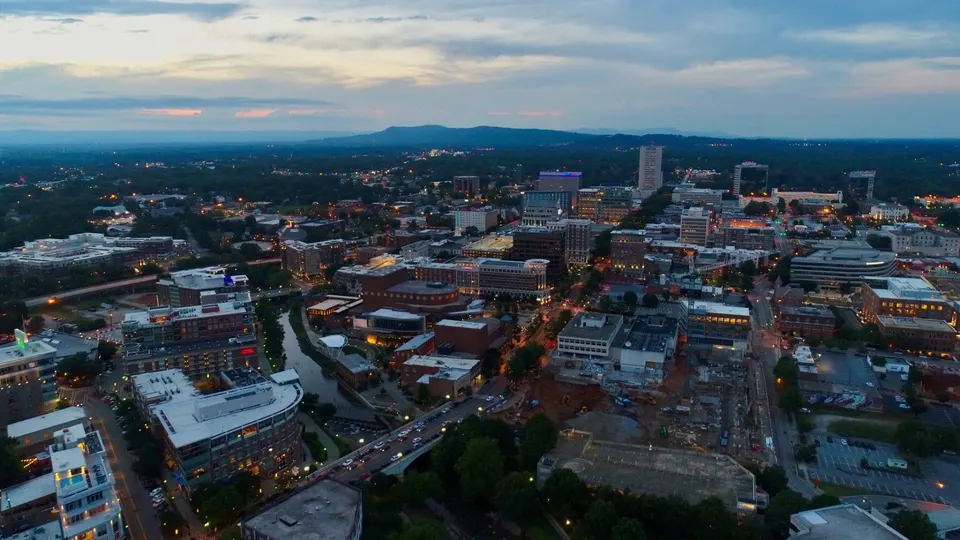
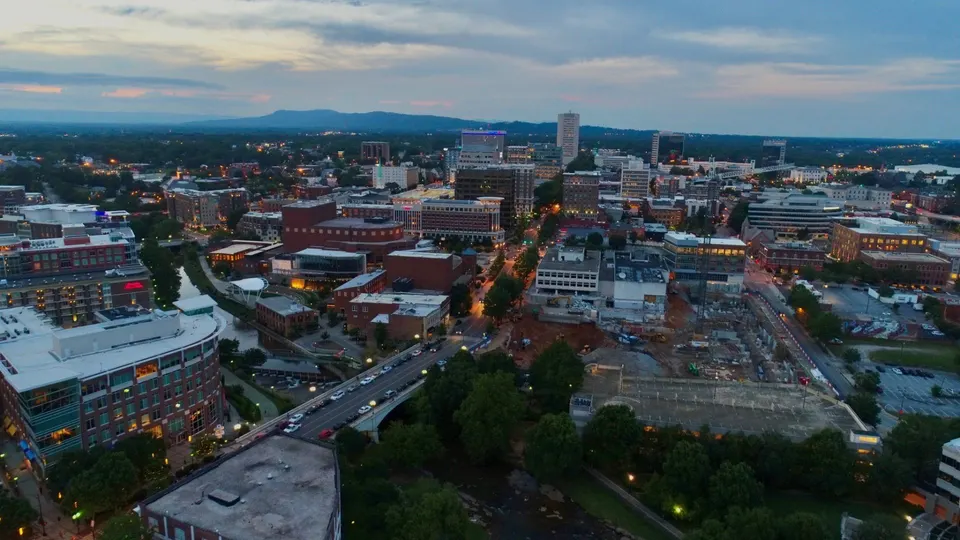
The Triangle is a region. Greenville is a city that kept its center. In Raleigh, dinner in Durham or a lecture in Chapel Hill means a drive, and plans tend to get made by geography. In Greenville most of it happens along Main Street and around Falls Park on the Reedy, with the Peace Center and the Liberty Bridge a short walk apart. Fewer choices, far less time between them.
Traffic is lighter, not absent. I-85 at rush hour and Woodruff Road on a Saturday will test anyone. Most in-town trips, though, from Augusta Road to downtown or North Main to Furman, stay short at most hours.
Dining is where Triangle transplants feel the downgrade first. Raleigh and Durham together support a deep, chef-driven scene. Greenville's is concentrated downtown and in pockets like Augusta Road and Travelers Rest. It is good and improving, but you will rotate through the same favorites sooner.
Healthcare in the Upstate runs through Prisma Health and Bon Secours, and both cover most families well. Leaving the research hospital ecosystem around Duke and UNC is a real loss for anyone managing a complex condition. Some people keep their Triangle specialists and make the drive.
Culture shifts from three campuses to one downtown and two schools. Furman hosts lectures and concerts, the Peace Center brings touring shows, and Clemson owns the fall calendar. The Hurricanes become a road trip.
Weather is close to identical: humid summers, short winters, ice more often than snow. The difference is geography. Raleigh sits hours from both the mountains and the coast. Here, Table Rock and Caesars Head are close enough for a weekday hike, and Lake Keowee for a summer evening.
Real Estate Reality
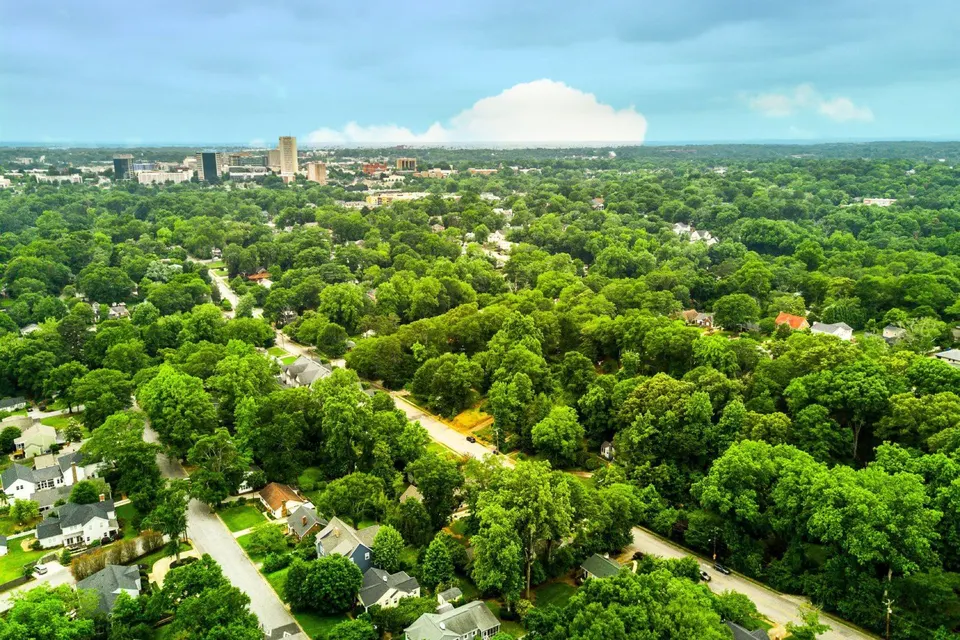
The first surprise is land. For a comparable spend, buyers generally find larger lots, deeper setbacks and more distance from the neighbors in and around Greenville than in Raleigh's established neighborhoods. Head toward Travelers Rest, The Cliffs or Lake Keowee and the gap widens.
The second is property tax structure. South Carolina assesses an owner-occupied legal residence at 4% of fair market value and second homes and rentals at 6%. The 4% ratio is not automatic: you apply for it, or the county applies 6%. Married couples can claim only one primary residence in the state. North Carolina assesses all real property at 100% of market value, with no primary-versus-second-home split. A ratio is not a bill, though. Local millage rates differ on both sides of the line, so compare actual tax bills on specific houses before you count the savings.
Neighborhood matching works better by feel than by price. Hayes Barton and Five Points buyers usually look first at Augusta Road or Alta Vista: older houses, mature trees, a short walk to coffee. North Hills buyers who like a condo or newer walkable living tend to land downtown or on North Main. Cary and Wake Forest families usually want established suburban neighborhoods with strong school options, and Greenville has several.
The established luxury streets close to downtown are few, and they turn over slowly. New construction is easy to find. A renovated 1930s house on a tree-lined street within walking distance of anything is not.
Insider Perspective: What Most Buyers Miss
Charlotte Douglas becomes a regional backup. GSP serves 30 nonstop destinations as of February 2026 and is easy to use. For everything else, Charlotte's American Airlines hub is about 1.5 hours up I-85. Losing RDU stings less than Raleigh buyers expect.
The tax gap has a schedule on one side only. North Carolina's 3.49% for 2027 is already set. South Carolina's next cuts trigger from 2027 only if revenue grows at least 5% a year. South Carolina's new income adjusted deduction (SCIAD) also phases out at higher incomes, so the people paying the 5.21% rate get the least help from it.
Your North Carolina beach or mountain house can stay put. South Carolina allows one 4% legal residence per married couple. A second home in North Carolina, on the coast or in Highlands or Cashiers, does not count against that, so your Greenville primary can keep 4%. Buy the second home inside South Carolina and it is assessed at 6%. Confirm with a CPA and the county assessor.
A trailing spouse's job search looks different here. The Upstate's large employers are Michelin North America's headquarters, BMW Plant Spartanburg, Prisma Health and CU-ICAR. Research, biotech and university roles that are everywhere in the Triangle are thinner here.
Four hours is an awkward distance. It is too far for a casual day trip and close enough that family in Raleigh will expect you at every birthday. Plan for that before you sign.
Clemson matters socially. An NC State fan in the Upstate will be fine, mostly. Clemson and Furman ties shape a lot of how newcomers get introduced around.
Lake Keowee is a different kind of lake. About 18,500 acres and 387 miles of shoreline, owned and managed by Duke Energy, which sets the shoreline and dock rules. Read those rules before falling for a lot.
Three trade-offs worth sitting with
- Higher income tax, lower assessment on your residence. Run both against your own return and your own house before deciding which one wins.
- One downtown instead of four. You trade choice for proximity, and most people stop missing the choice within a year.
- Mountains and a lake nearby, research institutions far away. The weekend gets better. The professional and medical safety net gets thinner.
Related Insights
Readers comparing North Carolina moves will find the Charlotte to Greenville comparison covers the same tax math from a different starting point, while our overview of life in Greenville SC fills in the day to day. Before you tour, read up on Greenville's best luxury neighborhoods, what executives moving to Greenville should expect, and what to look for in a Greenville luxury real estate advisor.
A Local, Advisory Perspective
Raleigh buyers tend to arrive with the clearest checklist of any feeder market: schools, a walkable center, a mountain or lake within reach, and a fair read on taxes. Damian Hall Group, with Blackstream | Christie's International Real Estate in Greenville, works those lists against real streets. That means knowing which Augusta Road and Alta Vista houses feel closest to Hayes Barton, where the 4% assessment changes the numbers on a specific house, and when Lake Keowee or The Cliffs is the better answer. The trade-offs get named early.
Frequently Asked Questions
Will I pay more state income tax if I move from Raleigh to Greenville SC?
Yes, if you are a high earner. North Carolina's flat rate is 3.99% in 2026 and is scheduled to drop to 3.49% in 2027, while South Carolina's top rate is 5.21%. Retirees living mostly on Social Security feel the difference far less, because South Carolina fully exempts it from state income tax.
How far is Greenville SC from Raleigh?
Greenville is about four hours from Raleigh by car. That is too far for a casual day trip but manageable for holidays and family visits. Charlotte Douglas, about 1.5 hours from Greenville, often replaces RDU for longer flights.
Which Greenville neighborhoods feel like Hayes Barton or Five Points?
Augusta Road and Alta Vista are usually the closest match, with older homes, mature trees and a short walk to coffee and shops. Buyers who liked North Hills condo living often look downtown or on North Main instead. The established streets near downtown are few and turn over slowly.
How does South Carolina property tax compare to North Carolina?
South Carolina assesses an owner-occupied primary residence at 4% of market value and second homes at 6%, while North Carolina assesses all property at full market value with no primary-residence split. You must apply for South Carolina's 4% ratio. Local rates differ in both states, so compare actual bills on specific houses.
What do people miss most after moving from the Triangle to Greenville?
Most miss the Triangle's depth: Research Triangle Park employers, Duke, UNC and NC State, the research hospital ecosystem, RDU and a larger dining scene. In return they get one walkable downtown, more land and privacy for the money, and the mountains and Lake Keowee within an hour.
Thinking of selling? A written valuation, with the reasoning, from the team that holds the records. Buying? The Quiet List hears first.